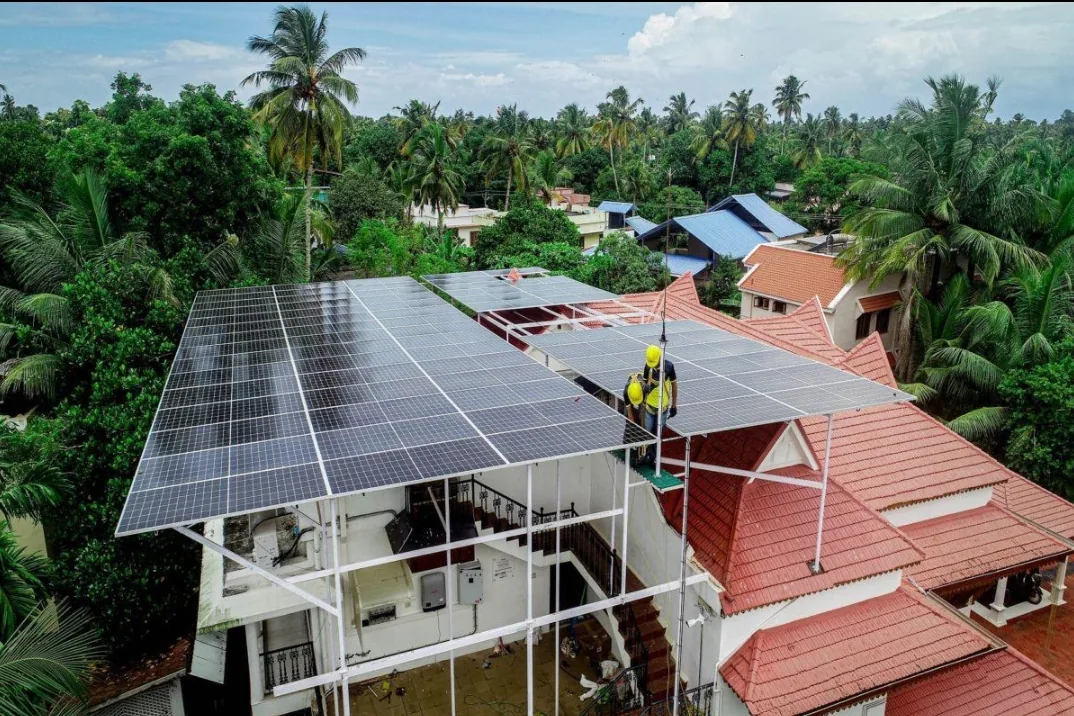
Your home.
Your own power plant.
Rooftop solar designed around the way Indian families live: lower bills, backup when you need it, and a terrace you can still enjoy.
Why go solar at home
The sun already shines
on your roof.
Most homes use the most electricity when it is hottest: fans, coolers and ACs running in the afternoon. That is exactly when solar produces the most.
- Cut your monthly electricity bill with power made on your own roof
- Protect your family from future tariff increases
- Add battery backup for power cuts with a hybrid system
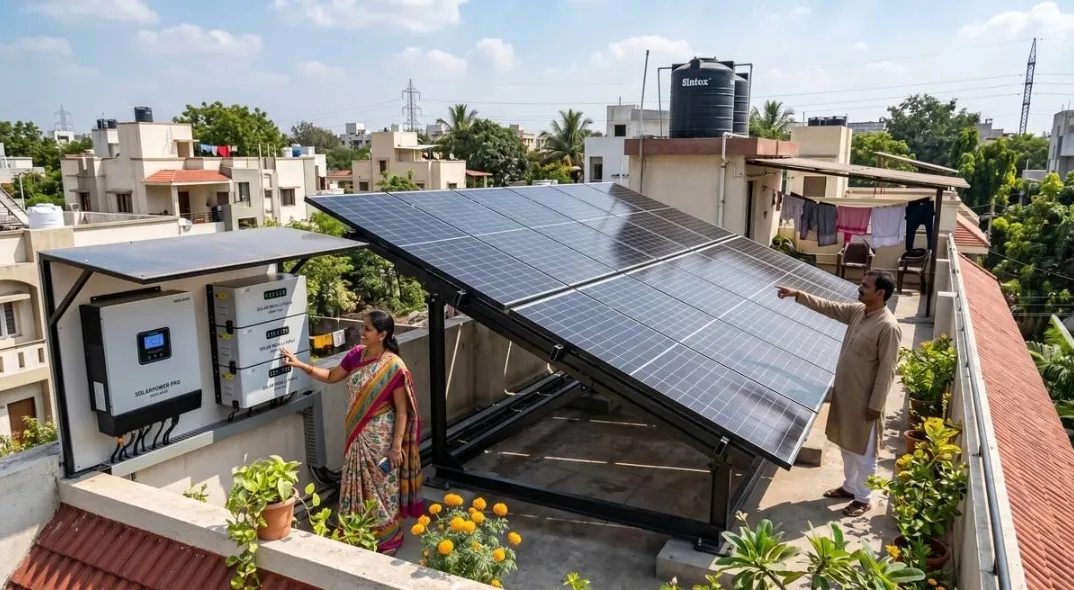
- Raised structures keep your terrace usable for drying clothes, plants and family time
 Representative
Every kind of Indian roof
Flat, tiled or sloped.
We plan for it.
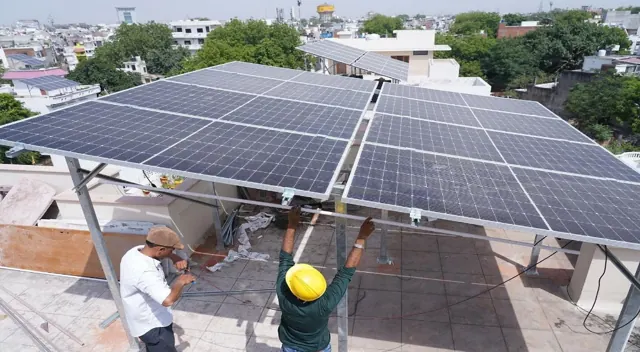
RCC flat terrace
The most common Indian roof. Panels can sit on a low structure or an elevated frame that leaves space underneath.
Elevated structure
A raised steel frame that lifts panels above the terrace, often chosen when the roof is used daily.
Tiled & sloped roofs
Mounting suited to tiles or sloped surfaces, planned to avoid leaks and respect the roof's design.
Two-storey & villas
Cable routes and inverter placement planned neatly across floors.
Village homes
Off-grid or hybrid options where grid supply is limited or unreliable.
Shade check
Water tanks, trees and neighbouring buildings are considered so panels get the most sunlight.
 Representative
Subsidy guidance
Help with the
PM Surya Ghar scheme.
Eligible residential rooftop systems may receive central government financial assistance under the PM Surya Ghar: Muft Bijli Yojana. We guide you through the application and paperwork.
Eligibility, subsidy amounts and approvals are decided by the scheme rules, the national portal and your electricity distribution company (DISCOM), and can change. We will explain the current process during consultation.
Ask about subsidySolar savings calculator
What could your roof
save every month?
Move the slider to your monthly bill. Watch your rooftop fill with panels and your bill shrink, with every assumption shown.
It depends on your monthly units. As a rough guide, 1 kW produces around 4 units a day in many Indian cities. Use the calculator above, and we confirm the size after a site visit.
Mounting is planned for your roof type. For RCC terraces we discuss options such as ballasted or anchored structures and waterproofing at the fixing points before installation.
Yes. An elevated structure lifts the panels so the space below stays usable, and it also provides shade.